Cornell Notes: How to Use the Cornell Note-Taking System
Learn how to take notes with the Cornell system: how to divide your page, where to write notes, questions and keywords, and how to review with a summary.
The Cornell note-taking system is a systematic way of formatting and organizing your notes. The system was developed by an education professor at Cornell University in the late 1950s.
How does it work?
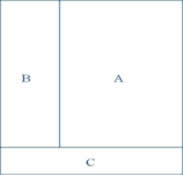
Start by dividing your paper into two columns, with space for a summary at the bottom. In area "A" (see the picture), you write your notes while the teacher is speaking or while you're reading your textbook.
When the lecture is finished, fill in your own questions about the notes. Comments and keywords go in area "B".
You can then cover section "A" and quiz yourself using the questions in the left column. Do this regularly. Finally, in section "C", write a short summary of the notes.
Further notes
During the lecture, write in paragraphs, leaving a blank line between each new line of thought. Having your own shorthand might be a good idea (see how to use abbreviations). Try to stick with the general ideas rather than the illustrative ones, and write as legibly as you possibly can.
Helpful resources
The Cornell note-taking system, explained by Cornell University's Learning Strategies Center.